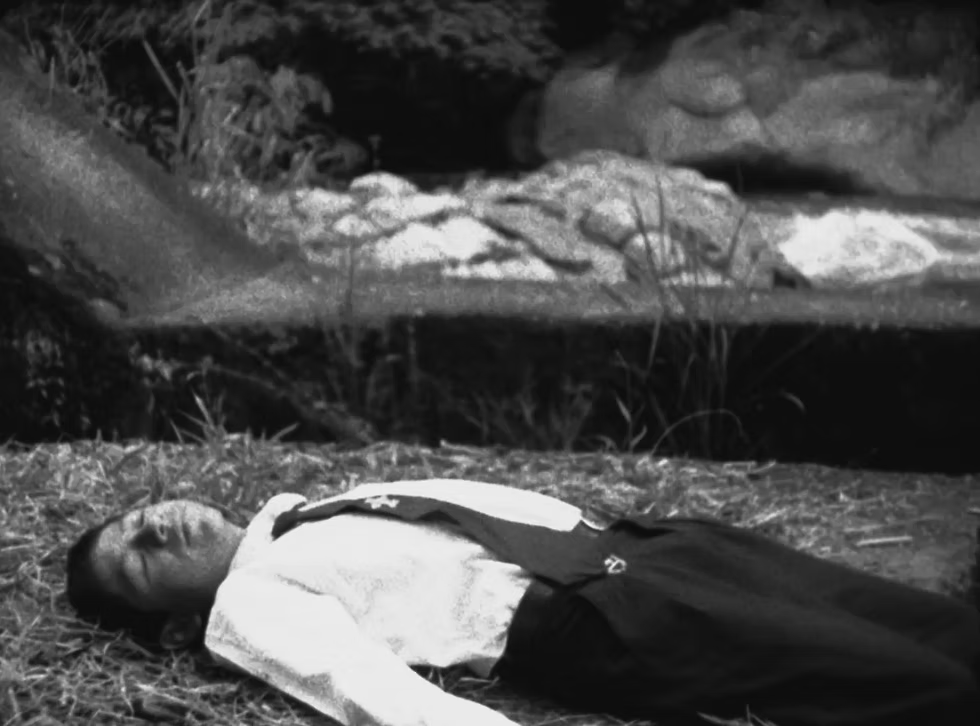
En las profundidades de la llanura amazónica peruana, Meshia, una adolescente indígena matsigenka, descubre a Iván, un niño que desapareció hace dos años y fue dado por muerto. Decidida a salvarlo, se embarca en un viaje río arriba hacia las montañas, dirigiéndose a la ciudad de Quillabamba. Iván necesita urgentemente una cirugía ocular para detener una infección que amenaza su vista. Mientras un retraído Iván lucha con el trauma de su misterioso pasado y unos sueños inquietantes, Meshia queda hipnotizada por el atractivo de la ciudad. Impulsada por la ambición y sus ilusiones, participa en un concurso de belleza local. A pesar del silencio de Iván, crece un vínculo extraño entre ellos. Pero cuando aparece un extraño con intenciones siniestras, sus mundos interiores —y su frágil conexión— se ponen en riesgo. Filmada en una mezcla de formatos de 16mm, Super 8 y digital, Punku —que significa «portal» en quechua— es una película de ficción híbrida que desdibuja los límites entre lo visto y lo no visto, ofreciendo un portal a realidades y dimensiones superpuestas.


In the depths of the Peruvian Amazon rainforest, Meshia, a teenage Matsigenka girl, discovers Iván—a boy who vanished two years ago and was presumed dead. Determined to save him, she embarks on a journey upriver toward the mountains, heading for the city of Quillabamba. Iván urgently needs eye surgery to stop an infection threatening his vision. While the withdrawn Iván grapples with the trauma of his mysterious past and unsettling dreams, Meshia becomes mesmerized by the allure of the city. Driven by ambition and her own illusions, she enters a local beauty pageant. Despite Iván’s silence, a strange bond begins to form between them. But when a stranger with sinister intentions appears, their inner worlds—and the fragile connection between them—are put at risk. Shot in a mix of 16mm, Super 8, and digital formats, Punku—which means «portal» in Quechua—is a hybrid fiction film that blurs the boundaries between the seen and the unseen, offering a gateway to overlapping realities and dimensions.


Ficha Técnica:


PAÍS: Perú, España 

Ficción – COLOR – 2025 – 132 min – 35mm y DCP

Dirección: Juan Daniel Fernández Molero 

Idioma original: Español, Quechua y Matsigenka 

Guion: Juan Daniel Fernández Molero 

Fotografía: Johan Carrasco Monzón 

Edición: Juan Daniel Fernández Molero 

Sonido: Fernando Mendoza Salazar
Música: Carlos Gutiérrez Quiroga 

Dirección de arte: Susana Torres 

Producción: Juan Daniel Fernández Molero, Verónica Ccarhuarupay 

Intérpretes: Marcelo Quino, Maritza Kategari, Ricardo Delgado, Hugo Sueldo, Juan Carlos Molero, Maruja Sueldo, Yorguen Carreño, Anelí Tapia, Celeste Torres, Milagros Medina 


Público recomendado: Mayores de 14 años en compañía de un adulto
Premios y Festivales


2025 | Berlinale-Festival Internacional de Cine de Berlín | Sección Forum – Estreno mundial 

2025 | FICCI-Festival Internacional de Cine de Cartagena de Indias | Sección Iberoamericana-Premio a la Mejor Cinematografía Iberoamericana 

2025 | BAFICI-Festival Internacional de Cine de Buenos Aires | Competencia Vanguardia y Género 

2025 | Festival Internacional de Cine del Uruguay | Competencia Internacional-Mención Especial del Jurado Joven 

2025 | Festival de Cine Latinoamericano de Rosario | Competencia Latinoamericana-Mención Especial a la Mejor Dirección 

2025 | CRFIC-Festival Internacional de Cine de Costa Rica | Sección Año 13 

2025 | New Horizons International Film Festival | Competencia Internacional 

2025 | Festival de Cine de Lima PUCP | Competencia Latinoamericana Ficción 

2025 | Santiago Festival Internacional de Cine-SANFIC21 | Sección Visiones del Mundo 

2025 | Melbourne International Film Festival | Sección International-Latin America   


Dirección: JUAN DANIEL FERNÁNDEZ MOLERO (PERÚ)


Juan Daniel Fernández Molero (1987, Perú) es director, productor, montajista y programador de cine. Sus películas, que incluyen al documental Reminiscencias (2010), el largo de ficción Videofilia (2015) y la película híbrida Punku (2025), han sido exhibidas en festivales como Berlinale, Rotterdam, FIDMarseille, New Horizons, Mar del Plata, BAFICI, Cartagena, FICValdivia, La Habana, Singapur, Flaherty NYC, y en espacios como el MoMA en Nueva York, la Casa Encendida y Tabakalera en España, y la Cineteca Nacional de México. Ha ganado varios premios, como el Tiger Award en Rotterdam, Grand Prix en Split, y Mejor Cinematografía Iberoamericana en Cartagena, además de haber sido candidato peruano a los 89º premios Óscar con Videofilia y beneficiario de los fondos Hubert Bals, Visions sud est, y DAFO. Estudió cine en Buenos Aires y Nueva York, y formó parte de los programas de formación de Berlinale Talents y el Trainee Project for Young Film Critics de Rotterdam. En sus inicios fue prensa de cine, colaborando para los blogs Cinencuentro y La Fuga. Fundó Tiempo Libre el 2008, productora con la que también distribuye películas en circuitos culturales y organiza talleres de cine. Ha programado para los festivales internacionales Lima Independiente, Cine Radical, Singapur, y Cine//B, y ha hecho muestras de cine para el Museo de Arte de Lima, Cinema Tropical, Cinemateca de Bogotá, Municipalidad de La Convención, y diversos cineclubes. Molero ha dado clases maestras para el Fashion Institute of Technology, Corriente Encuentro de No Ficción, y la Universidad Camilo José Cela de Madrid. Ha sido montajista en Alba (2016), La chucha perdida de los incas (2019) y Huaquero (2024), y como coproductor en Fiebre (2022), películas seleccionadas en festivales como Rotterdam, San Sebastián, IDFA, Tallinn, Biarritz, y FICUNAM. Actualmente, vive entre Perú y España, mientras produce Valvas de Andrea Hoyos y coproduce Panamericana Transatlántica de Mateo Vega. 


Juan Daniel Fernández Molero (1987, Peru) is a filmmaker, producer, editor, and film programmer. His work includes the documentary Reminiscencias (2010), the fiction feature Videophilia (and Other Viral Syndromes) (2015), and the hybrid film Punku (2025). His films have been showcased at festivals such as Berlinale, Rotterdam, FIDMarseille, New Horizons, Mar del Plata, BAFICI, Cartagena, FICValdivia, Havana, Singapore, Flaherty NYC, as well as at venues like MoMA in New York, La Casa Encendida and Tabakalera in Spain, and the Cineteca Nacional of Mexico. He has received numerous awards, including the Tiger Award in Rotterdam, the Grand Prix in Split, and Best Ibero-American Cinematography in Cartagena. His film Videophilia was Peru’s official submission to the 89th Academy Awards. He has been a recipient of grants from Hubert Bals Fund, Visions Sud Est, and DAFO. Fernández Molero studied film in Buenos Aires and New York, and is an alumnus of Berlinale Talents and the Rotterdam Trainee Project for Young Film Critics. He began his career as a film journalist, contributing to the blogs Cinencuentro and La Fuga. In 2008, he founded Tiempo Libre, a production company through which he also distributes films in cultural circuits and organizes film workshops. As a programmer, he has worked with international festivals including Lima Independiente, Cine Radical, Singapore, and Cine//B, and has curated film programs for institutions such as the Lima Museum of Art, Cinema Tropical, Cinemateca de Bogotá, the Municipality of La Convención, and various film clubs. Molero has delivered masterclasses for the Fashion Institute of Technology, Corriente: Encuentro de No Ficción, and the Universidad Camilo José Cela in Madrid. He edited Alba (2016), La chucha perdida de los incas (2019), and Huaquero (2024), and co-produced Fiebre (2022)—films that have screened at festivals such as Rotterdam, San Sebastián, IDFA, Tallinn, Biarritz, and FICUNAM. He currently lives between Peru and Spain while producing Valvas by Andrea Hoyos and co-producing Panamericana Transatlántica by Mateo Vega. 

Privacy Settings
We use cookies to enhance your experience while using our website. If you are using our Services via a browser you can restrict, block or remove cookies through your web browser settings. We also use content and scripts from third parties that may use tracking technologies. You can selectively provide your consent below to allow such third party embeds. For complete information about the cookies we use, data we collect and how we process them, please check our Privacy Policy
Youtube
Consent to display content from - Youtube
Vimeo
Consent to display content from - Vimeo
Google Maps
Consent to display content from - Google